
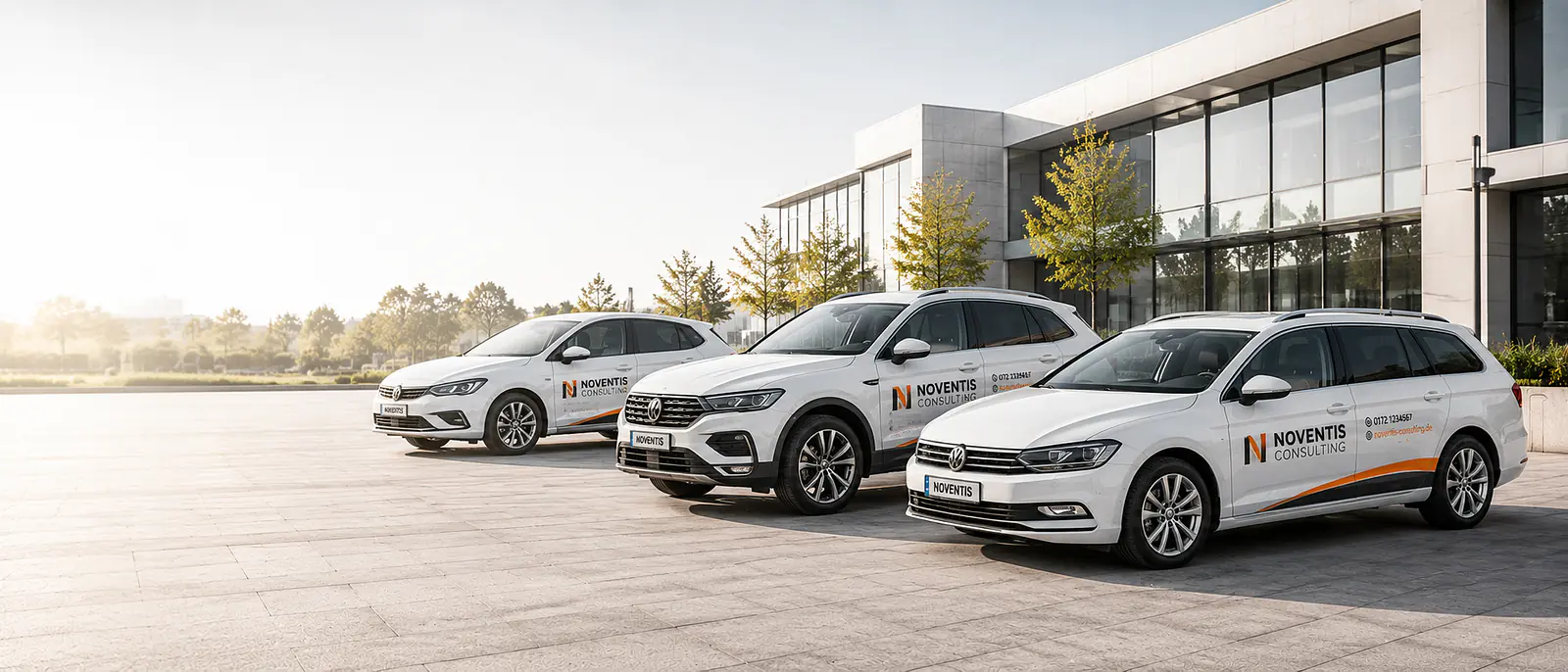
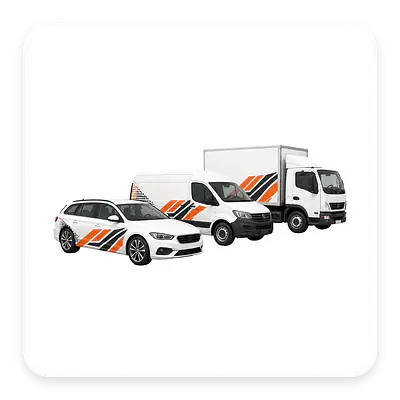
Consistent brand presence
All vehicles follow the same design guidelines while still being adapted to their respective shape and size.
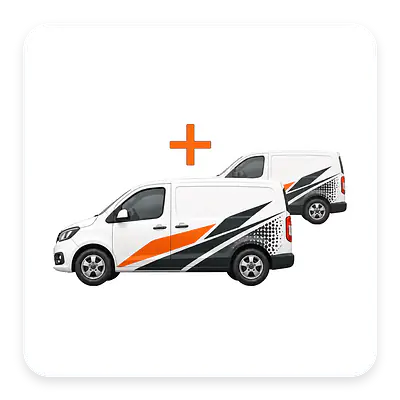
Scalable for new vehicles
The existing layout can be reused for additional vehicles, locations or teams.
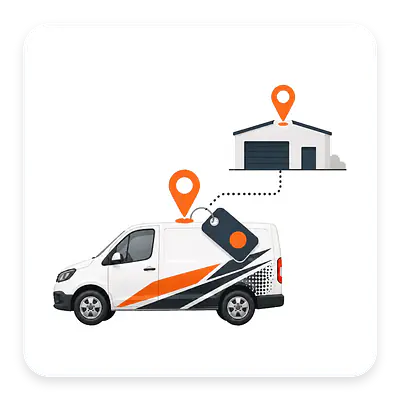
Clear vehicle identification
Vehicle numbers, branches, teams or areas of operation can be systematically integrated into the vehicle lettering.
What does effective fleet branding require?
The key is a repeatable system that works across different vehicles and remains clearly recognizable.
- Consistent logo placement
- Defined colors and contrasts
- Variants for different vehicles
- Documentation for reorders
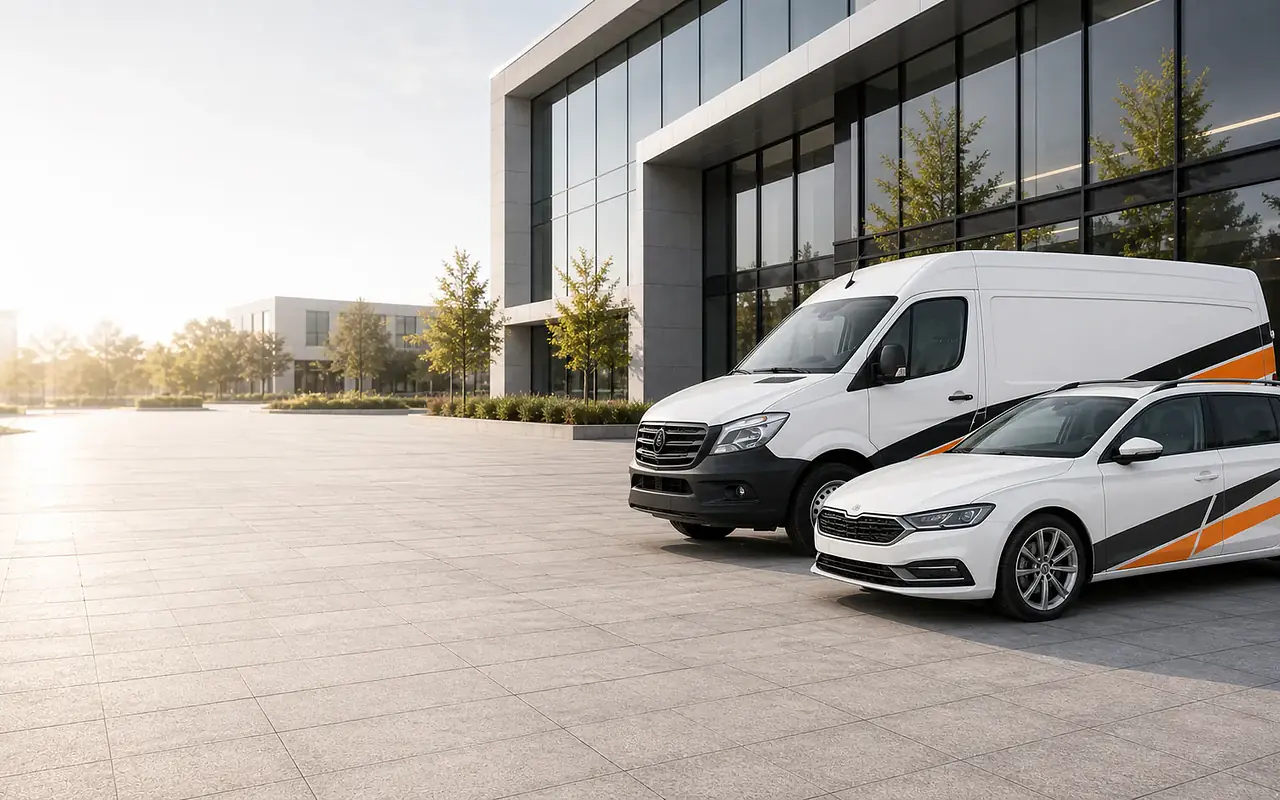
Master layout
A master layout defines logo placement, contact areas, font sizes and spacing for the entire fleet.
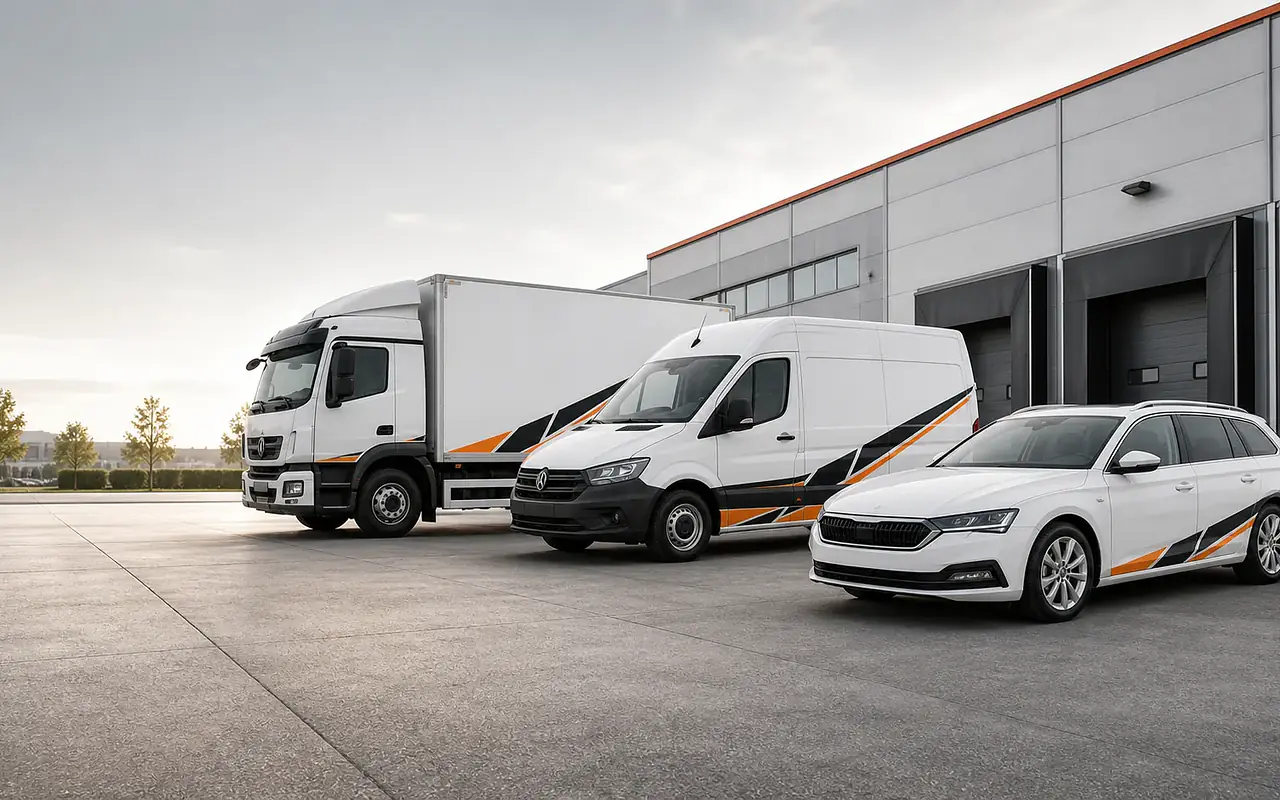
Vehicle variants
Small cars, vans and trailers are derived from the same design system.
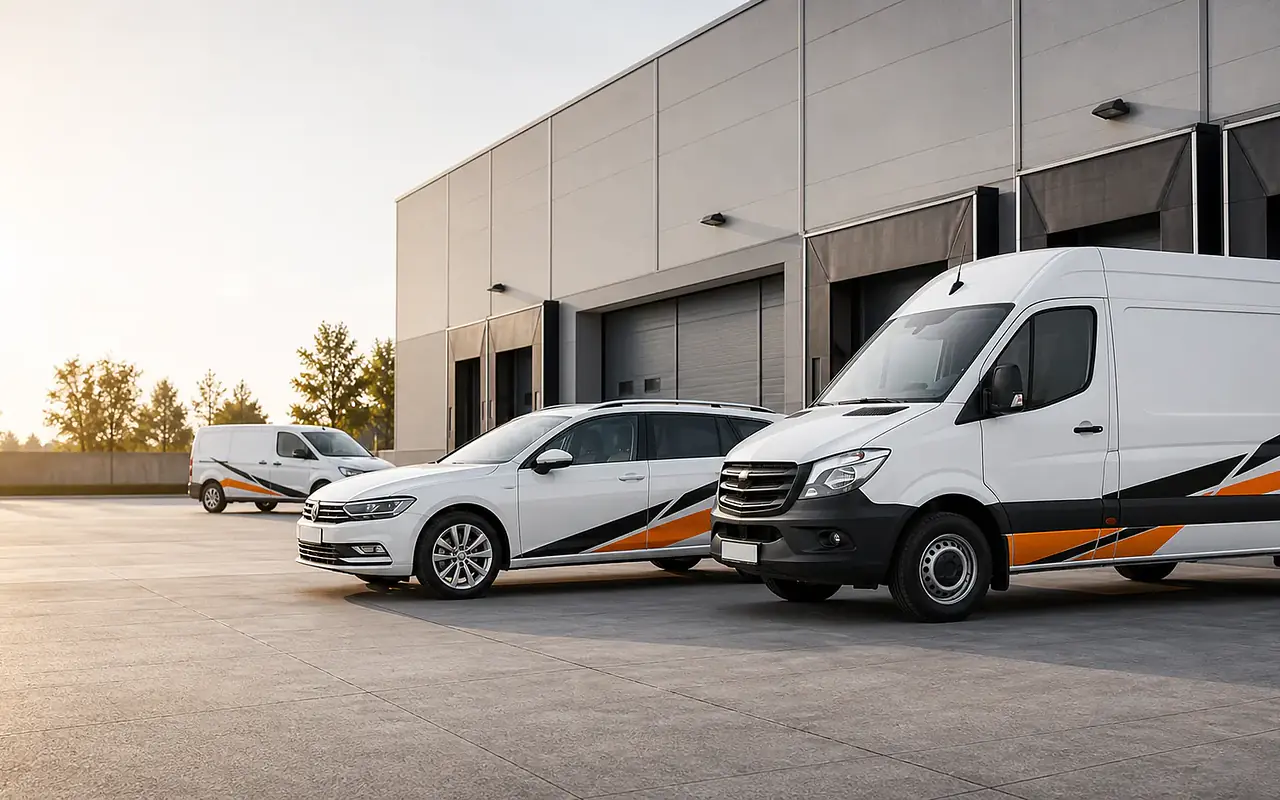
Reorders
Clearly assigning each vehicle, design and set of dimensions makes future reorders easier.
What holds effective fleet branding together
What holds effective fleet branding together
Fleet branding does not mean applying identical graphics to every vehicle. What matters is a recognizable system made up of the logo, brand colors, typography, visual language and defined information zones. This system must work just as well on compact cars as on vans or vehicles with a different roof height.
First, define the elements that always remain the same: logo, base colors, tagline and web address. These are followed by variable details such as location, vehicle number, telephone number or service area. This separation reduces errors and simplifies future reorders.
Master layout and vehicle variants
Master layout and vehicle variants
A master layout defines proportions and spacing. A suitable variant is derived from it for each vehicle model. Door gaps, handles, body grooves, sensors and different window areas must be taken into account separately for each model, while preserving the visual character.
Photograph and measure every vehicle. Name files and variants clearly, for example by model, location and vehicle number. Proper documentation is just as important as the design itself for a growing fleet.
How to keep your fleet consistent over time
How to keep your fleet consistent over time
Keep a binding color reference, the fonts used and the final production dimensions on file. Also note which elements were implemented as cut lettering and which as printed graphics. This makes it easier to classify new vehicles and order replacement parts precisely.
When operating across multiple locations, responsibilities and approvals should be clearly defined. A central template prevents telephone numbers, taglines or logo spacing from deviating from one another in an uncontrolled manner. Variable contact details can still remain location-specific.
Consider installation and maintenance
Consider installation and maintenance
Plan the order in which the vehicles will be handled and document the result after installation with straight-on photos. Regular visual inspections help identify damaged or outdated information at an early stage. When changing brands, no-longer-valid telephone numbers, domains or services should be replaced promptly.
A clearly structured system saves time, especially when adding vehicles later: the new vehicle does not require a completely new design, but rather a suitable variant of an already defined brand presence.